
Character Co. Cannabis Dispensary Shop Now!
Character Co. Ltd.
  • CHARACTER CO.
    • About Us
    • Support Local
  • WHAT’S NEW
    • Rewards Program
    • Cannabis Deals and Savings
  • CANNABIS MENU
    • Flower
    • Pre-Rolls
    • Cartridges
    • Concentrates
    • Edibles
    • Topicals
    • Accessories
  • MEDIA
    • Cannabis Blog
    • Videos
    • In the News
  • INFO
    • Contact

rolling papers

Rolling Papers – Is there a difference?

January 28, 2021
0 Comment

Rolling Papers

Is there a difference?

Joints have long been a favourite method of cannabis consumption and it’s easy to understand why. Joints are easily shareable, ready to travel, and compact. But before you can smoke a joint, one has to roll it, and every joint begins with a rolling paper.

First manufactured in Spain in the 1700’s, rolling papers have come a long way since then. Upgrades in materials, manufacturing processes, watermarks and presentation have elevated the humble rolling paper to luxurious levels (Shine’s 24 K Gold Leaf Papers anyone?).

Because of this, not all rolling papers are created equal, nor provide the same experience.

Length

Industry sizes for rolling papers are Single Width, 1 1/2, 1 1/4, King size, and King Size Slim. There are other sizes available, such as the Double Wide or 12 Inchers, but those are less popular and much harder to find.

Single Width (SW) – These are your smallest papers, and the size that most people are familiar with if they grew up buying the white Zig-Zags at your local gas station. The single wide rolling paper is 70mm long and 34mm wide (give or take a millimeter depending on the brand). These are perfect when smoking for one.

70mm x 34mm (requires a 70mm long rolling machine, or 79mm adjustable)

1 ½ – These papers got its name because it can hold 50% more than a single wide paper, measuring 78mm in length and 62mm in width. This paper allows for much wider (or ‘fatter’) joints in diameter. If you prefer hauling back for longer hits, this size should do the trick. Good for groups of 3 to 4 people when rolled correc

79mm x 62mm (requires a 79mm long rolling machine, or 110mm adjustable)

1 ¼ – You guessed it, the one and a quarter sized papers holds 25% more than the single width. Measuring in at 78mm long and 46mm in width, it is the same length as the 1 ½ paper. The 1 ¼ size is considered the most popular among joint smokers. Once rolled, this size closely resembles the size of your standard cigarette and is perfect for a solo sesh at home with Netflix, or groups of 2-4.

79mm x 46mm (requires a 79mm long rolling machine, or adjustable)
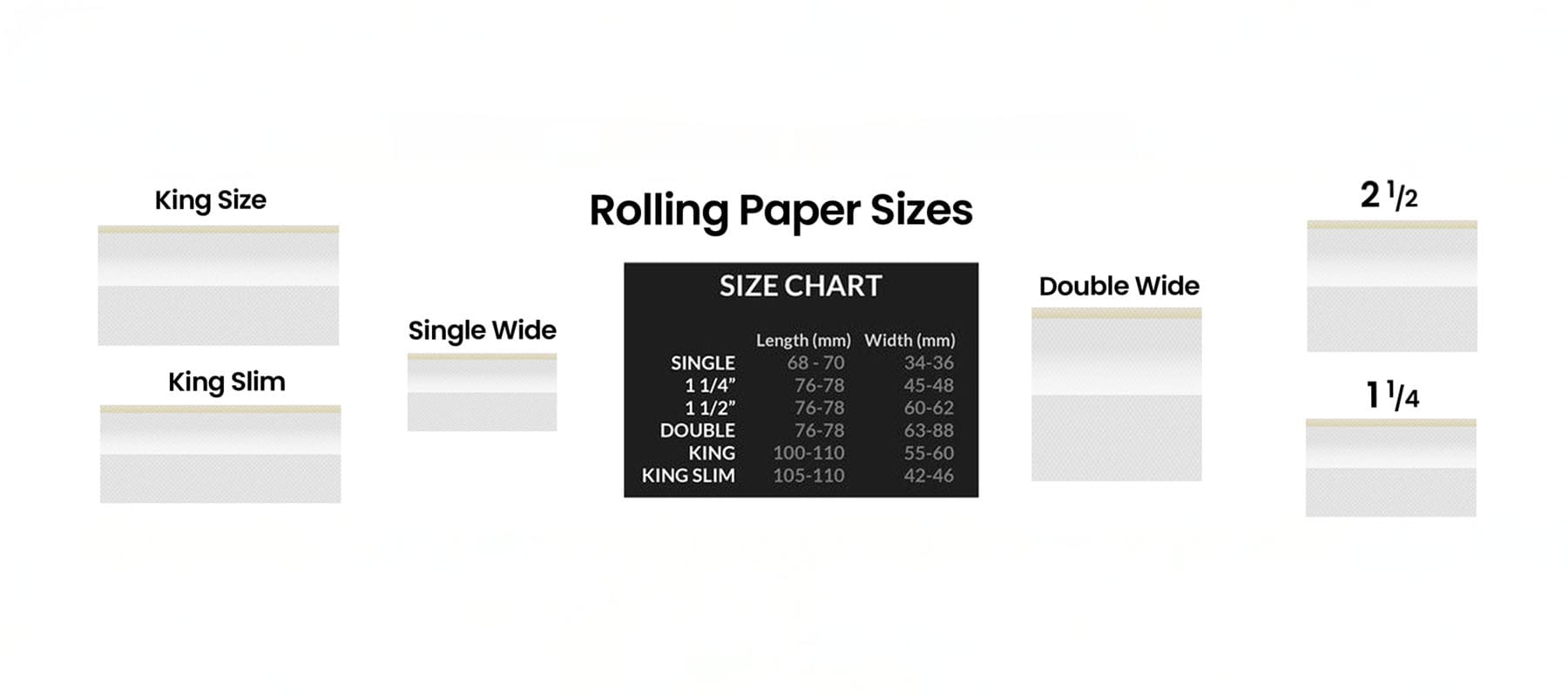
King Size & King Size Slim – The King Size paper is the most standard for size across all brands, measuring 110mm in length. The width will vary from 42mm for the slims and up to 60mm for the regular. Since it’s the longest paper, it’s also the largest (except for novelty sizes) and the best paper for group sessions.

110mm (requires a 110mm long rolling machine)

Materials

Now that you’ve chosen what size you need, you have to decide what kind of material you prefer. Have you ever noticed that some papers are easier to roll with than others? Or that sometimes, your joint stays lit longer than other times? Are you continuously relighting the joint?

Wood Pulp – The original. The classic. The OG.

Wood pulp papers have been around for as long as there have been rolling papers. Thicker than their rice or hemp counterparts, making them the easiest to roll with. These papers are great for beginners just learning to roll.

The cons? Wood pulp papers burn faster than others, can affect the taste of your joint, and are the least environmentally friendly to be manufactured.

Rice – For the Masters.

As the name would imply, these rolling papers are processed from rice and the occasional additive depending on the brand, such as hemp or flax. These papers burn the slowest, which means they have a harder time staying lit.

Rice papers are the thinnest rolling paper available. They are so thin they’re almost see-through, and because of this, harder to roll with. However, they are the cleanest to smoke if you’re looking to get the most flavour out of your cannabis.

Hemp – Something for everyone.

Hemp papers are becoming more and more popular, and for good reason. They are relatively easy to roll with, but still thin enough to avoid any harsh flavors in your joint, and better for the environment. Basically, they fit right in between the wood pulp and the rice papers in every category.

Our Favourite Rolling Papers

Over the years, we’ve tried almost all the rolling papers out there. Each come with their own pros and cons, but we’ve managed to narrow down our favourites listed below:

Irie Rolling Papers – For the budget conscious.

Irie rolling papers are fairly unremarkable, which is a good thing when looking for a budget friendly smoking paper. A box of Irie’s can be found for under $40, and they’re quite generous offering a whopping 64 leaves per pack.

Made from European hemp (but made in China), these papers burn slowly and the glue sticks well provided it’s not too wet when rolled. Made thicker than your usual hemp paper, they provide a certain texture that’s easier to roll. Especially considering the lack of watermarks.

All in all, Irie Rolling Papers are the best bang for your buck.

Juicy Jay Rolling Papers – It’s all about the flavour.
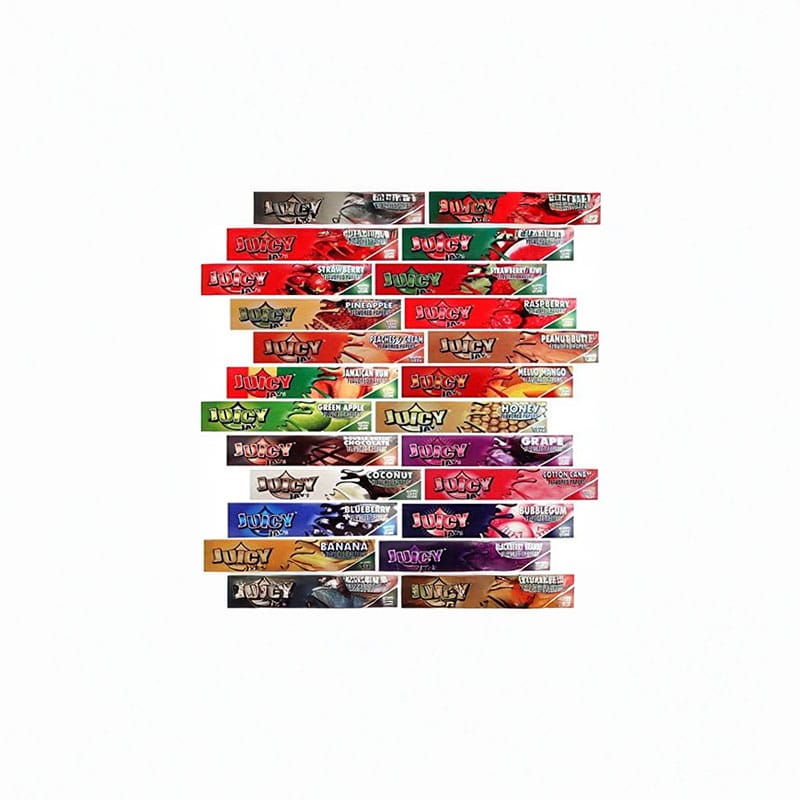
If you’re into spicing up your cannabis, then Juicy Jay’s are by far the go-to for flavoured papers. The hits are smooth, and the flavour is surprisingly mild. In fact, most of the flavour is enjoyed when licking your lips as a residual bonus. The best part is that they also smell good, which really enhances that smoke experience.

The burn isn’t perfect though, and tends to canoe if the glue is too wet, but at least it won’t unravel. The papers themselves are usually printed with whatever flavour icon you chose, and look absolutely adorable. The honeycomb watermark provides a decent burn, and the papers are easy enough to roll with.

Available in pretty much every flavour imaginable.

RAW Organic Hemp Rolling Papers – Best in hemp.
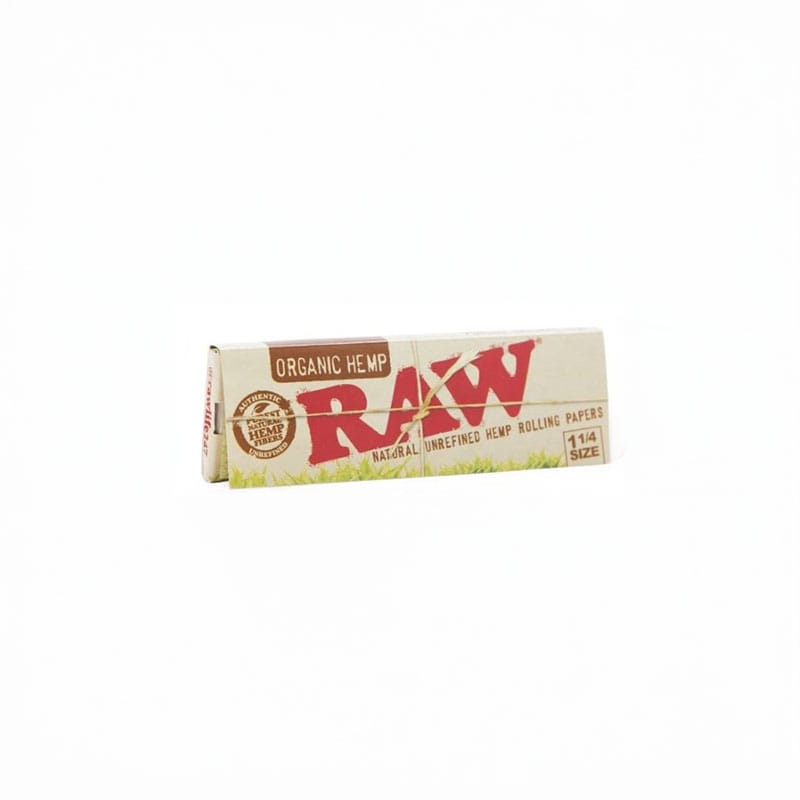
RAW papers are no doubt the current King of rolling papers, producing some of the best quality papers available. In addition to offering top-notch products, RAW also has a foundation that helps support worthwhile causes and projects, helping millions. It’s no wonder RAW has developed such a cult-like following among cannabis lovers worldwide.

Our personal favourite RAW papers is the organic hemp line. These rolling papers are additive free, allowing you to really taste the flower. Complete with RAW’s patented crisscross watermark to ensure an even burn and prevent annoying runs. A little tough to roll with, but the struggle is worth it. RAW Organic Hemp Rolling Papers provide an incredibly smooth smoke with a slow burn so you can sit back and enjoy!

Elements Rolling Papers – Rice is nice.

Elements, as its name implies, is obsessed with earth-friendly materials and green energy in making its papers. It’s not all talk either, even their papers production facility in Spain is entirely wind-powered. Made with sugar gum for its adhesive and rice for the paper itself, these papers are so thin they’re almost translucent. While you’re smoking, the paper produces no flavour and very little ash, which means you can really taste the flower. It’s just a super clean and smooth smoke.

Apart from the paper itself, Elements throws in a few extras outside of that as well. Each pack comes with a magnet, so you don’t have to worry about ruining the next paper in line. They also come with perforated crutches for rolling and “perfect roll technology”, because if we’re being honest, rolling with rice papers can sometimes be tricky. Not for beginners, but worth the effort.

Pure Hemp Unbleached Rolling Papers – Staff pick.

There is no extra fluff with Pure Hemp Unbleached Rolling Papers. No gimmicks or flashy branding. Just a paper that rolls easy, tastes great, and burns smooth.

Like the name states, Pure Hemp is made of 100% natural, unbleached and chlorine free hemp fiber. A little thicker feeling than other hemp papers, so it has a nice grip to it and feels safer to pack a little extra without being more difficult to roll. Finally, the gum is generous making the stick solid. These papers pretty much guarantee a perfect spliff every time, regardless of the consistency of your flower.

Why do we love them so much?

They’re easy to roll, no matter what. Sometimes it’s tricky if your hands are wet, or the flower is too dry, but not with these. They roll anything, and stick really well providing the glue isn’t licked clean off.

(Pro tip: less moisture on sugar-based gum is best)

All About the Taste & No Waste

They also taste like nothing, which is perfect when you really want to taste that top shelf cannabis.

Finally, Pure Hemp Unbleached Rolling Papers burns slowly, consistently, and smoothly. Smoking a joint rolled with Pure Hemp is an all-around enjoyable experience.

Read More

History of Rolling Paper Sizes & Hand-Rolled Cigarettes

January 20, 2021
0 Comment

Rolling Paper Sizes

A HISTORY

Where it All Began

Experts believe the tobacco plant, as we know it today, began growing in the Americas at about 6000 BC. It is believed that Native Americans began using tobacco in various ways (including smoking) a few thousand years later. As time went on, tobacco and tobacco usage became very common in the Americas. There is a drawing of smoking by the ancient Mayas from about 1400 years ago. In it, a Mayan is shown smoking a roll of tobacco leaves with a string.

DISCOVERED BY EUROPEANS

COLUMBUS

Tobacco was first discovered by Europeans via Christopher Columbus. Columbus received dried tobacco leaves as gifts when he landed in what is now the Caribbean. Two of his crew are credited with first observing smoking when they were exploring what is now Cuba. The natives taught them how to smoke, and one of the crew, Rodrigo de Jerez, took the habit home to Europe. In fact, his neighbors were so frightened by seeing smoke coming out of his nose and mouth that they notified the local Inquisition. Jerez was jailed for 7 years. By the time Jerez was finally released, smoking had become all the rage in Spain.

BLUNTED ENDS

Smoking at that time was done via loosely rolled, open-ended cigar type products with multiple wrappers or binders held together by licking the ends of the leaves. As cigar smoke progressed, many improvements came to Cigars. For example, one “new” style of cigar rolling formed a rounded smooth tip. This “Blut” end caused this new style to be called a Blunt. Today, most cigars, even Coronas and Robustos, have the same rounded end, but the original term Blunt still applies.

INHALATION BEGINS

The birth of the modern, rolled cigarette happened in 1614 in Seville, Spain. King Philip III required all tobacco grown in the Spanish New World to be shipped to a central location in Seville to control pricing and prevent oversupply. Because of this, Seville became the new world center for the production of cigars. Street beggars would pick up the remainders of used cigars, take them apart and re-roll them in newspaper. Because of the scarcity of tobacco and their desire to enjoy every drop, the street beggars began holding the smoke in their lungs (inhaling). This took hold and made its way through the working class until the practice became common. Thus the modern, hand-rolled cigarette was born.

THE DAWN OF THE
CIGARETTE PAPER

LET IT BURN

Of course burning newspaper had its own problems, especially with the then lead-based inks. Spanish merchants began offering plain, unprinted paper for this purpose. One small factory in the Alcoy region that was making specialized packing papers offered the first paper designed specifically for cigarette rolling. This paper was later improved and an additional factory in Alcoy opened to compete. Over time, more cigarette paper factories opened near Barcelona, then France, then the UK, and eventually there were many paper factories across Europe.

In the Alcoy region there is still one rolling paper factory left, which can actually trace its roots back to the first rolling paper factory. This Alcoy factory produces many of popular papers to date. Brands suchs as RAW, Elements, Juicy Jay’s & DLX are made using processes that date back to the origin of this factory. Some of the craftsmen at this factory have been making papers for generations!

VARIOUS SIZES

In Spain, the size that was developed based on consumer preference was approximately 78mm long by 44mm high. At first, this was the size that dominated the entire European market. However, King James I, and later his successors, enacted heavy tobacco taxes. This led the British market to move to a smaller size that held about 25% less tobacco. This new small size was about 70mm long by 38mm high. As the British Empire grew, so did the proliferation of this smaller British sized rolling paper. In fact, to this date, in most of the commonwealth countries the number one size is the small 70mm paper (single width).

This paper became known as “Standard Size”, or “Single Wide.” The original Spanish 78mm paper became known as “Spanish Size”, except the British referred to it as One and a Quarter, in reference to how it holds about 25% more tobacco then a British Standard Sized paper.

THE KING IS BORN

THE KING IS BORN

Flash-forward about 100 years and the industrial revolution allowed the mass production of machine-made cigarettes. At first, most cigarettes were either 70mm or 78mm long without a filter. However in the 1950’s, filtered cigarettes began to take over. Consumers were concerned that by purchasing a filtered cigarette they were getting less tobacco as the filter took up some of the space in the paper. Thus, large tobacco companies responded to this by increasing the length of cigarettes to accommodate the filter. Cigarette size increased from 70mm or 78mm to a new 84mm size.

This new size became known became known as “King Size,” named after the King of England who was seen publicly smoking this new cigarette. Over the next several decades the shorter cigarettes saw their market share shrink dramatically until they were all but replaced by the new 84mm “King Size.” However, rolling paper factories missed the opportunity to change their sizes to suit this new consumer preference and continued producing the legacy sizes of generations past. It wasn’t until 2009 when HBI finally produced the world’s first 84mm cigarette rolling papers with their launch of DLX brand 84’s as they are called. While it may appear that rolling paper companies are dramatically behind the times, this is common among rolling paper factories as most companies prefer not to change with the times.

However, this sort of dinosaur attitude has recently been changing as new and improved forms of cigarette papers have been launched in recent years. Among them are natural unbleached and unrefined papers (e.g. RAW), ultra thin rice papers (e.g. Elements), and extra slow burning papers (e.g. DLX). The next oldest significant rolling paper innovation was the invention of interleaved rolling papers which was launched 116 years ago at the 1900 world’s fair, and led to the formation of the Zig Zag brand. Zig Zag means how the papers are interleaved in a zig-zag format.

COMMONWEALTH COUNTRIES

56 independent countries make up the Commonwealth in Africa, Asia, the Americas, Europe and the Pacific.

CONFUSED?

In Commonwealth countries the #1 selling size is still the 70mm standard size papers. However in the rest of the world, including the USA, Spanish Size (1 1/4 ) is by far the better seller. Overall, there has been a market trend towards this original 1 1/4 size and sales data has shown that it is increasing in popularity, especially in the UK and Canada. Now that there is finally an 84mm rolling paper available, sales of that size are increasing steadily and will likely become one of the most popular sizes, mirroring the extreme popularity of 84mm King Size cigarettes.

Now it’s time to address so-called “King Size rolling papers,” which are actually misnamed. These date back to 1984 when Rizla launched its 100mm rolling papers catered towards women who preferred the 100mm cigarette size. People first referred to this as “Queen Size.” Another firm tried to outdo Rizla and launched a 110mm paper, and named it “King Size.” However this is a misnomer. King Size cigarettes are all 84mm long. A 110mm paper is actually a longer “Queen Size” and is much longer than the preferred 84mm standard King Size.

The aforementioned “King Size” rolling papers were typically 110mm long and 52mm high. However, the newer format of this “King Size” is 110mm long and 44mm high (sometimes called King Size, sometimes called King Size Slim). This has become one of the most popular sizes in Europe and is growing while the older King Size is decreasing. The difference is the 8mm in paper height. The 44mm height is the original “Spanish Sized” or 1 ¼ sized height and seems to be the preferred height by most smokers for all rolling papers (regardless of length).

BOOKLET

The origins of the cigarette rolling paper booklet can be traced back to a priest, Father Jaime Villanueva Estingo (Jativa, Alcoy region of Spain, 1765). Before Father Villanueva’s invention, tobacco smokers laboriously and wastefully cut sections of large sheets of paper to roll their cigarettes. He devised a more convenient method of peeling small sheets from pocket-size booklet dispensers and taught this idea in Alcoy, where the first rolling paper booklets ever were produced. People still pay homage to Father Villanueva in Alcoy to this very day.

PAPER COMPANIES

There are 3 huge, multinational rolling paper companies. One of the largest is Republic/Bollore in France. They make:

– Job
– Top
– Zig Zag
– OCB
– Gambler
– Abadie

It’s key competitor is Imperial Tobacco UK. This large, multinational tobacco company owns:

– Rizla
– Joker
– EZ-Wider

Another very large outfit is Miquel Y Costas. With large factories in Argentina and Spain, they are the makers of:

– Smoking
– Bugler
– Pure Hemp
– Bambu

After these 3 big guys come a series of independent brands (RAW, Elements, DLX, Skunk, Chills, Zen, Juicy Jays, etc.). Although HBI didn’t create all of these brands, they have become the headquarters for most, if not all quality independent rolling paper brands, especially the cutting edge ones. With tremendous increase in niche market sales, HBI has been able to achieve large growth and success. However, their sales are still only a tiny fraction of the big guys.

CHINA

While China did invent paper, it did not invent the cigarette paper, and for good reason. The Chinese Emporor Chongzhen banned tobacco and ordered that anyone who smoked it should be beheaded. Tobacco was completely forbidden in China for hundreds of years and thus no cigarette paper was ever developed there. It is only quite recently that China has begun producing any cigarette rolling paper. Much of the cheaper rolling papers now coming out of China are actually shoe paper (the crinkly paper that you find stuffed into the toe of a new pair of shoes) being marketed as rolling paper. While the two look similar, shoe paper burns fast and tears easily. The Europeans have a long head start over the Chinese when it comes to cigarette rolling papers and have mastered their craft over many generations and hundreds of years.

By HBI Canada Inc.

Read More
All Rights Reserved. 2022©Character Co. Ltd. |  Powered for Life ♥ Character Co. Ltd. Cannabis Dispensary.
payment
X
  • Menu
  • CHARACTER CO.
    • About Us
    • Support Local
  • WHAT’S NEW
    • Rewards Program
    • Cannabis Deals and Savings
  • CANNABIS MENU
    • Flower
    • Pre-Rolls
    • Cartridges
    • Concentrates
    • Edibles
    • Topicals
    • Accessories
  • MEDIA
    • Cannabis Blog
    • Videos
    • In the News
  • INFO
    • Contact